Kitchen Cleaning Records: A Practical Guide for Cafés
Keep kitchen cleaning records clear and useful with practical tips for Australian cafés and restaurants. Build a checklist that shows what was done, who completed it and what needs follow-up.
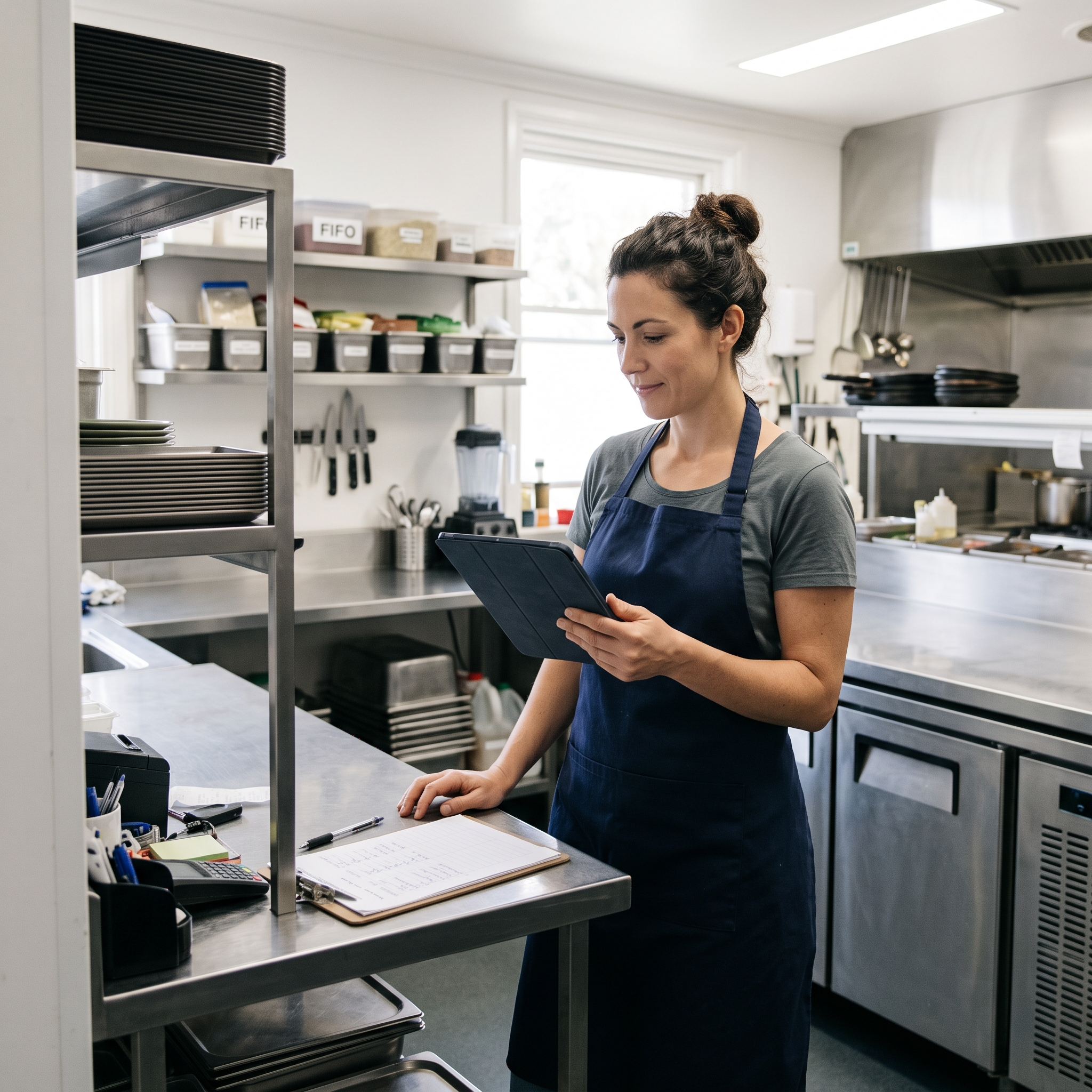
At the end of a busy café shift, a tick beside “kitchen cleaned” can leave plenty of questions. Which areas were completed? Was the equipment ready for use? Did anything need another check?
Useful kitchen cleaning records give your team a clearer picture of the work completed and anything still outstanding.
For Australian cafés, restaurants and takeaway businesses, a practical cleaning checklist can help organise tasks, share responsibility and make follow-up easier.
What should kitchen cleaning records include?
A useful cleaning record identifies the task and shows what actually happened.
Consider including:
- The date and, where useful, the completion time.
- The area, surface or equipment involved.
- The task completed.
- The staff member who completed it.
- Any issue that prevented completion.
- The action taken or follow-up required.
Keep the wording specific. “Prep bench cleaned and sanitised” gives more information than “kitchen done”.
Your cleaning schedule describes what should happen and when. Your completed record shows what happened on that occasion.
Start with a schedule that matches your kitchen
Walk through your kitchen and list the areas and equipment your team uses.
Include food preparation surfaces, utensils, storage areas, floors, waste areas and equipment that needs particular cleaning methods.
For each task, identify:
- What needs cleaning.
- Whether sanitising is also needed.
- The method or work instruction to follow.
- When the task should happen.
- The staff member or role responsible.
Food Standards Australia New Zealand recommends planning cleaning and sanitising around the equipment involved, the required frequency and the appropriate methods.
Make the schedule specific to your operation. A small coffee shop and a restaurant preparing several services each day will have different needs.
Make cleaning and sanitising clear
Cleaning and sanitising are separate steps.
Cleaning removes food residue, grease and other dirt. Sanitising reduces microorganisms to a safe level on a properly cleaned surface.
A quick wipe does not necessarily achieve both.
Where both steps are needed, make that clear in the task description. Staff should be able to find the correct method without guessing.
Follow the product label, equipment instructions and your workplace procedures, including the correct dilution, contact time and any rinsing requirements. Refer to the safety data sheet for chemical hazards, handling and protective equipment information.
Organise tasks by when they are needed
Avoid putting every task into one long end-of-day list.
Some tasks need attention during service or between activities. Others belong in a closing routine or a planned deeper clean.
You might organise your schedule into:
- During-service tasks.
- Between-task or changeover cleaning.
- End-of-shift tasks.
- Scheduled deeper cleaning.
Set the frequency according to the equipment, how it is used and your food safety procedures. A scheduled closing clean does not replace cleaning needed earlier in the day.
Record completion after the work is done
A checklist works best when staff update it as tasks are completed.
Avoid ticking the whole list at the beginning of a shift or filling it in later from memory.
Make sure staff understand the difference between:
- Completed.
- Not completed.
- Not applicable, with a reason where needed.
If your form only has a tick box, provide somewhere to explain exceptions. An empty box alone does not tell the next person whether a task was missed, delayed or unnecessary that day.
Record problems and follow-up actions
Sometimes a task cannot be completed as planned.
Equipment may be damaged, the correct cleaning product may be unavailable, or an area may need further attention.
Record what happened and tell the appropriate supervisor. Where an issue affects safe use, follow your procedures before the equipment or area is used again.
A useful note might read:
“Lower fridge shelf cleaning incomplete because the shelf is damaged. Supervisor notified. Follow-up assigned to the closing manager.”
Use actual details from the situation. Include the action taken, who owns the follow-up and when it needs attention.
Give the supervisor something useful to review
A supervisor’s review should help identify unfinished work and recurring problems.
Useful questions include:
- Are the scheduled tasks complete?
- Do any notes need immediate action?
- Are the same tasks repeatedly missed?
- Do staff understand the cleaning method?
- Is enough time or suitable equipment available?
A visual check can help identify remaining dirt or residue, but appearance alone does not confirm that sanitising was effective. Staff still need to follow the appropriate method.
If the same task is regularly missed, review the workload, timing and instructions with the team.
A simple cleaning record example
Use this structure as a starting point and adapt it to your kitchen:
- Date:
- Area or equipment:
- Task:
- Procedure or method reference:
- Scheduled time or frequency:
- Completed by:
- Completion time:
- Status:
- Issue identified:
- Action taken:
- Follow-up person and due time:
- Supervisor review, where required:
Keep detailed work instructions available separately so the daily record stays easy to complete.
Paper or digital cleaning records?
Either approach needs clear tasks, honest entries and regular review.
With paper records, keep the current checklist accessible and store completed sheets consistently.
With digital records, make sure staff know how to access the system, record completed work and explain anything outstanding.
KitchenCheck can help food businesses keep food safety records organised and support a consistent daily routine. It works alongside suitable procedures, staff training and active supervision.
Start by improving one checklist. Make the tasks clearer, add space for exceptions and check that the next shift can understand what still needs attention.
Further guidance
Food Standards Australia New Zealand’s Safe Food Australia guide includes guidance on cleaning and sanitising, along with example record templates.
Use the guidance alongside your business’s procedures and any requirements relevant to your operation.