When a Temperature Check Needs an Action, Not Just a Number"
Learn a simple response routine for cafés, restaurants and hotels: record the reading, act quickly and keep follow-up clear during a busy shift.
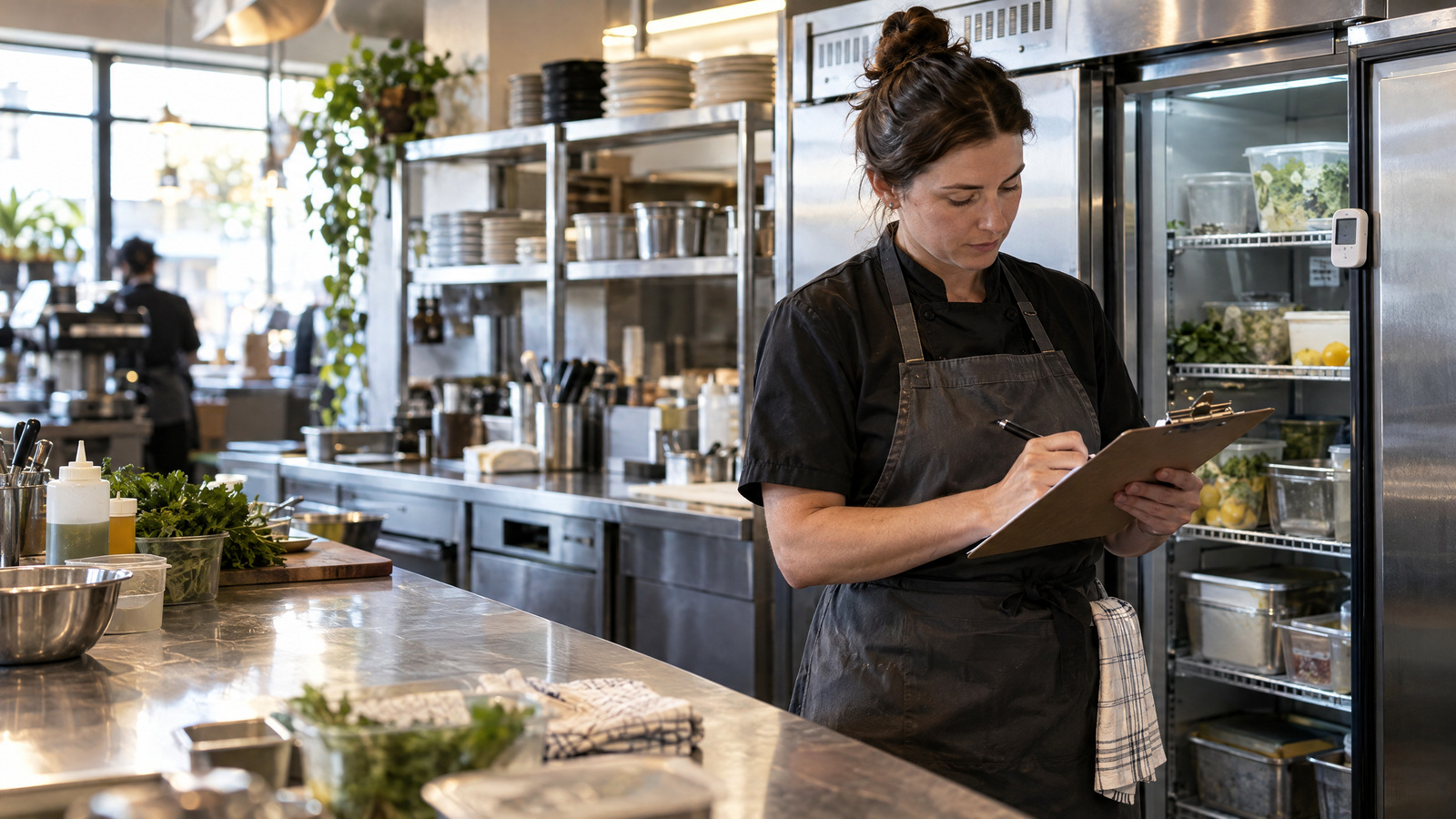
A temperature check takes only a moment. Knowing what to do when the reading needs attention is the part that makes the check useful.
In a busy café, restaurant or hotel kitchen, it is easy for a number to become just another item on a page. The shift is moving, customers are arriving, prep needs finishing and people are already thinking about the next task. If a reading looks wrong or sits outside the range your venue expects, the team needs a clear response while the details are still fresh.
The aim is not to turn a normal kitchen routine into paperwork. It is to make sure a small issue does not become a forgotten one.
Start with a clear record
When a temperature check needs attention, record the basics straight away. Note what was checked, when it was checked, the reading you saw and who completed the check.
That sounds simple, but it matters. A note that says “fridge issue” leaves the next person with questions. A clear entry gives the manager or incoming shift a proper starting point. They can see which unit or item was involved, how long ago it was checked and whether someone has already responded.
The record should help the kitchen move forward, not make people hunt for context later.
Follow the venue’s next-step process
Every venue has its own equipment, food-service routine and internal process. The important thing is that staff do not have to guess what happens next.
For one issue, the next step may be checking the reading again. For another, it may mean checking a door seal, moving items to another working unit, letting a manager know or organising maintenance. The right response depends on the situation and the process your venue has in place.
What keeps the work practical is giving staff a simple prompt at the time of the check. If the next action is clear, people are more likely to do it properly instead of leaving a vague note for later.
Record the action, not only the alert
A temperature alert without a follow-up tells only half the story. The useful part is being able to see what happened after the reading was taken.
Did someone recheck the unit? Was a manager notified? Were items moved? Was maintenance contacted? Was there a later check that confirmed the situation had been resolved?
Recording the action creates a useful handover for everyone who comes after. It also saves a manager from having to ask the same questions at the end of a long shift. Instead of chasing details through messages, paper sheets and memory, they can see the original check and the response together.
Make follow-up visible during the shift
The risk with any kitchen task is that it disappears into the pace of service. A staff member may do the right thing in the moment, then move straight into another priority. A manager may be busy with suppliers, rostering or the pass. By the end of the day, nobody is quite sure whether the issue was fully closed out.
That is why a useful record should show what still needs attention. When staff can see which checks are complete and which follow-ups are outstanding, responsibility is easier to share. The next person does not need to rely on a half-remembered conversation from earlier in the day.
KitchenCheck is designed around that daily reality. Teams can complete tailored checklists on a shared device, record temperature checks and see when a reading needs attention. The system prompts corrective actions, while managers can review what has been recorded, resolved and still outstanding.
Look for patterns, not just one-off moments
A single reading may have a simple explanation. Repeated issues are where a clear record becomes especially valuable.
If the same unit keeps needing attention, or the same part of the day produces missed checks, the pattern becomes easier to spot when the information is recorded consistently. That gives managers a better basis for a practical conversation with the team, a maintenance provider or a supplier.
The point is not to create more admin. It is to use the information the kitchen is already collecting to make the next shift run more smoothly.
Keep the routine easy enough to use
The best food-safety record is the one the team can actually complete during a busy day. That means clear instructions, a straightforward place to record a check and an obvious way to show the next action.
A good routine helps people stay focused on the work in front of them: check the right thing, respond when needed, record what happened and make sure nothing important is left behind for the next shift.
KitchenCheck helps Australian hospitality teams turn those daily moments into a clearer digital workflow. With tailored checklists, temperature alerts, corrective-action prompts and a simple view of what is complete or outstanding, it gives the team a practical way to keep the day moving.
Explore KitchenCheck and start a free trial: https://www.kitchencheck.com.au